Trying to decide between a brand-new home and an established neighborhood in Jenks? You are not alone. This choice often comes down to more than age or style, especially when school district, timeline, maintenance, and neighborhood layout can all shift the answer. In this guide, you will get a practical look at how new construction and older neighborhoods compare in Jenks so you can focus on the trade-offs that matter most to you. Let’s dive in.
Jenks buyers face two different paths
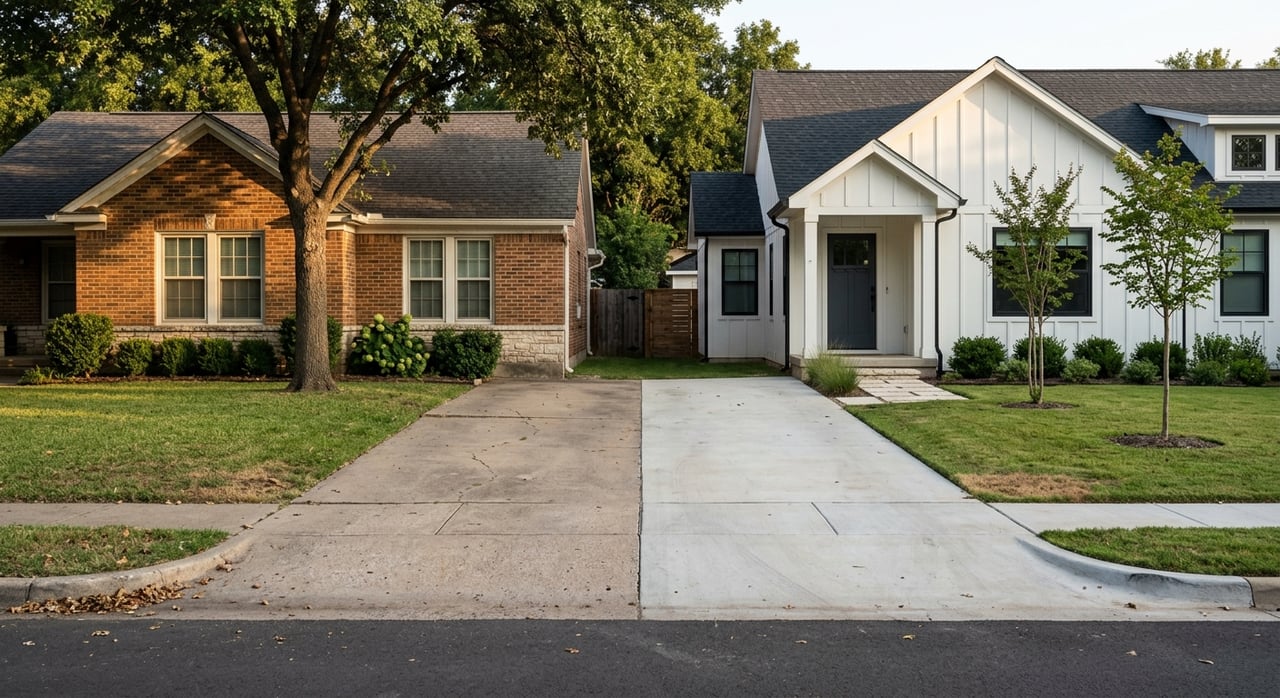
In Jenks, you are often comparing two very different experiences. One path is a newer home with current finishes, newer systems, and possibly a construction timeline still in progress. The other is a resale home in an established area where you can see the lot, street, trees, and wear-and-tear right away.
That difference matters in a market where price points can vary depending on whether you are looking at listings or closed sales. As of May 2026, Realtor.com described Jenks as a balanced market with a median listing price of $497,000 and 266 active listings, while Redfin reported a three-month median sale price of $391,000. The takeaway is simple: list prices and sale prices are not the same thing, so your comparison needs to stay property-specific.
New construction in Jenks
New construction in the Jenks area gives you a chance to buy a home with newer materials, modern layouts, and fewer immediate repair concerns. Many buyers also like the chance to choose finishes and have some warranty coverage during the first year. If you want a more turnkey feel, this path often checks that box.
Current new-home options also cover a wide price range. Frazier Meadows starts at $329,125 and offers 3 to 5 bedrooms with homes from 1,800 to 3,093 square feet. Community features there include a pool, pond, walking trail, park, and pickleball courts.
Other communities offer a different setting and feature package. Hickory Creek is a 119-lot gated community in Jenks Public Schools with two fishing ponds, a playground, a splash pad, and walking trails. That means your decision may depend just as much on the neighborhood setup as the house itself.
What newer subdivisions often feel like
Jenks development standards require a five-foot sidewalk on both sides of new streets, a five-foot street verge, a five-foot landscape strip, and at least one canopy tree every 40 feet. In plain terms, many newer subdivisions are built to feel more uniform and planned from day one. You may notice more consistent sidewalks, streetscapes, and spacing.
The trade-off is that landscaping usually starts young. If you love the look of big established shade trees, a newer neighborhood may not give you that right away. Over time, those planted streetscapes grow in, but they do not start with the same canopy you often find in older parts of town.
New construction timelines can vary
One thing buyers sometimes underestimate is how different builder timelines can be. Jenks says residential permits are normally ready within 3 business days on paper, but actual timing can stretch because of department coordination, project size, seasonal workload, or zoning issues. Permit applications also require plans and a site or foundation plan, and water and sewer tap fees must be paid before issuance.
Beyond permits, the build itself can vary a lot by builder and level of customization. Executive Homes says homes are often ready for closing in about 6 months from footings, while Epic Custom Homes says custom homes in Oklahoma typically take 10 to 14 months. If your move date is firm, that timeline question needs to be front and center.
Established neighborhoods in Jenks
Established neighborhoods appeal to buyers who want a setting that already feels settled in. You can usually see the mature trees, street pattern, lot shape, and surrounding homes immediately. That can make it easier to picture day-to-day life before you commit.
Old Town Jenks is a good example of that older in-town character. The city’s comprehensive plan describes it as primarily ranch-style, single-family detached homes on small lots with a traditional street grid. For some buyers, that older layout feels more central and more connected to the original fabric of Jenks.
Older areas may have different infrastructure
Established does not always mean updated. The Jenks comprehensive plan notes that many streets in Old Town are not improved with sidewalks or curb and gutter. If walkability, drainage design, parking patterns, or future additions matter to you, those details deserve a closer look.
This is one reason a resale home should be judged as a full package, not just by square footage or charm. The home, the lot, and the street can each affect how the property works for you long term. In older areas, those pieces are sometimes less uniform from block to block.
Older homes may need efficiency upgrades
Another common trade-off is comfort and utility performance. The U.S. Department of Energy notes that many older homes have less insulation than homes built today. That means a resale home may need upgrades after closing, such as insulation, air sealing, HVAC improvements, or window updates.
At the same time, older neighborhoods often offer the shade and character many buyers want. Jenks places emphasis on preserving mature trees and increasing the urban tree canopy. If you value a more rooted look and feel, an established neighborhood may be worth a little extra maintenance planning.
School district is a key Jenks question
In Jenks, the mailing address does not always answer the school district question. This is one of the most important local details to verify before you fall in love with a property. If school assignment matters to your household, do not assume the city name settles it.
For example, Frazier Meadows has a Jenks mailing address but is in the Bixby school district. Hickory Creek, by contrast, is in Jenks Public Schools. That is a major difference, and it shows why you should confirm the district for the exact address.
Jenks Public Schools reports 10 school sites, 12,385 students, and 1,700 employees. Those numbers help explain why school assignment is often central to home decisions in this area. Even if schools are only one part of your search, they can still shape resale and buyer demand.
Floodplain and drainage deserve attention
This is especially important in older parts of Jenks. Old Town includes significant 100-year and 500-year floodplains, and the city says development in floodplain areas should be carefully considered. If you are buying in or near an older neighborhood, this needs to be part of your due diligence.
Jenks also says it maintains parts of the drainage system, but property owners are expected to maintain ditches in front of their homes. The city also advises owners to check with Building Inspections before building, filling, altering, or regrading property. In practical terms, drainage is not a background detail. It can affect maintenance, future projects, and peace of mind.
How to choose the better fit
The best answer is usually not “new is better” or “old is better.” It is about which trade-offs fit your timeline, budget, maintenance tolerance, and preferred neighborhood feel. In a balanced market, resale potential may depend more on the specific property than on whether it is newly built or decades old.
If you want personalization, newer systems, a warranty-backed first year, and lower immediate repair risk, new construction may fit you better. If you want faster occupancy, mature trees, a more settled setting, and a traditional street pattern, an established neighborhood may make more sense. In Jenks, lot quality, condition, school district, and amenities can matter as much as age.
Questions to ask before you decide
Questions for a builder
- What school district is this exact address zoned to, and is that different from the mailing city?
- Is the lot in a floodplain, and will an elevation certificate or floodplain permit be needed?
- What is included in the base price, and what counts as an upgrade?
- What landscaping, fencing, or appliances are not included?
- What is the realistic completion date, and what could delay it?
- What warranty coverage applies after closing?
Questions for a resale home
- How old are the roof, HVAC, water heater, windows, and insulation?
- What major updates have already been completed?
- Has the property had drainage, ditch, or floodplain issues?
- Are there sidewalk, curb and gutter, or lot-size limitations that affect parking or future additions?
- What do utility and comfort upgrades likely look like after closing?
If you are weighing new construction against an established neighborhood in Jenks, a practical second opinion can save you time and help you avoid expensive assumptions. Reach out to Jeremy Grumbles to schedule your free consultation and talk through the trade-offs that fit your move.
FAQs
What is the main difference between new construction and established neighborhoods in Jenks?
- New construction usually offers newer systems, modern layouts, and builder warranty coverage, while established neighborhoods often offer mature trees, a more settled setting, and faster move-in potential.
Why should Jenks buyers verify the school district for a home address?
- A Jenks mailing address does not always mean the home is in Jenks Public Schools, so you should confirm the exact school district for any property you are considering.
Are older Jenks neighborhoods more likely to have drainage or floodplain concerns?
- Some older areas, especially near Old Town Jenks, may require extra attention to floodplain location, drainage conditions, and property-owner maintenance responsibilities.
How long can new construction take in the Jenks area?
- Timelines vary by builder and project type, with some homes closing in about 6 months from footings and more custom homes taking 10 to 14 months.
Do established homes in Jenks usually need more updates after closing?
- They can, especially for insulation, air sealing, HVAC, windows, or other efficiency-related improvements that may be less common in newer homes.
Is Jenks a buyer’s market or seller’s market right now?
- As of May 2026, Realtor.com described Jenks as a balanced market, which means the right choice often depends more on the property itself than on whether it is new or old.