Looking for a small investment property in Muskogee without stepping into a big-city price tag? That is exactly why this market gets attention from practical buyers. If you want a lower-cost entry point, realistic rent expectations, and a smarter way to evaluate risk, this guide will help you sort through the numbers and focus on what matters most. Let’s dive in.
Why Muskogee draws investor attention
Muskogee stands out as a more affordable market than many other parts of Oklahoma. According to U.S. Census QuickFacts for Muskogee, the city had an estimated population of 36,849 in 2024 and 14,821 households, with a 55.0% owner-occupied housing rate and a median gross rent of $858.
Current pricing also puts Muskogee in a lower-entry-cost category. Zillow’s Muskogee market data shows an average home value of $140,041, a median sale price of $162,250, about 185 homes in inventory, and homes going pending in roughly 64 days. Compared with statewide and metro averages cited in the research, that gives you a market where affordability matters more than chasing fast appreciation.
That does not mean every deal works. It means your success will usually come from buying carefully, setting realistic rents, screening tenants well, and keeping maintenance under control.
What “small investment” means here
In Muskogee, the most practical small investment properties are usually single-family rentals and modest multifamily properties. The research also points to mixed-use opportunities, but those are most plausible in downtown and redevelopment-focused areas rather than across the city as a whole.
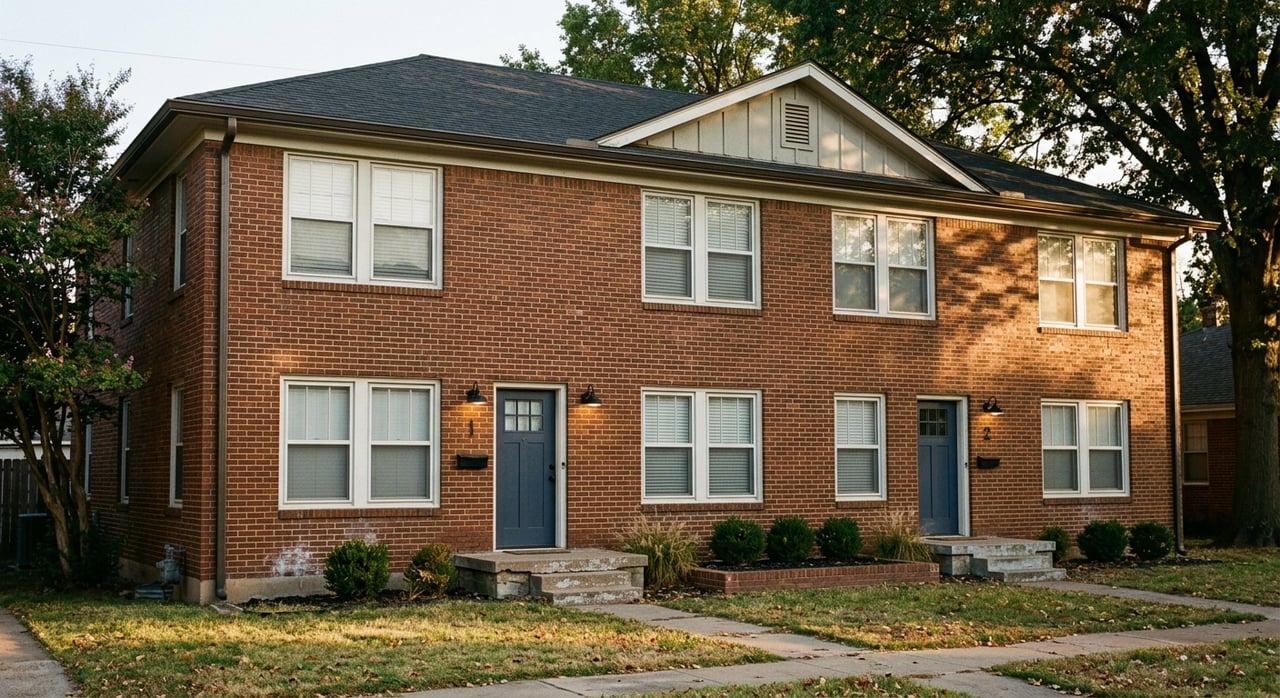
If you are just starting out, a single-family home may feel easier to manage and finance. If you want multiple income streams from one property, a duplex or modest multifamily property may deserve a closer look. The right fit depends on your budget, repair tolerance, and whether you want simpler management or more doors under one roof.
Start with realistic rent expectations
One of the biggest mistakes small investors make is overestimating rent. In Muskogee, public rent data suggests you should work from a range, not a single magic number.
Census QuickFacts lists Muskogee’s median gross rent at $858. HUD’s FY2025 fair market rents put a 1-bedroom at $712 and a 2-bedroom at $934, while Zillow’s current market snapshots show average rent around $1,119, with some small-unit listings around $649 to $750.
These numbers measure different things, so do not treat them as interchangeable. Census reflects occupied units, HUD offers a program baseline, and Zillow captures current asking rents. Used together, they suggest many small rentals in Muskogee will likely need to compete somewhere from the low $700s to the low-to-mid $1,000s, depending on size, condition, finish level, and location.
Compare Muskogee to other Oklahoma markets
Part of Muskogee’s appeal is simple: it is cheaper than many nearby markets. The research report notes Zillow averages of $214,159 for Oklahoma overall, $211,939 for Tulsa, and $202,648 for Oklahoma City, all above Muskogee’s average home value.
Rents are also lower than those larger markets. Zillow’s figures in the research show Muskogee average rent at $1,119, compared with $1,207 in Tulsa and $1,252 in Oklahoma City. For you, that means the purchase price may be more approachable, but rent ceilings may also be tighter, so the margin for repair mistakes can be smaller.
Best property types to consider
Single-family rentals
Single-family homes are often the easiest place to start. They can appeal to a broad pool of renters, and the management tends to be more straightforward than a larger multifamily building.
In a market like Muskogee, a clean, functional house with solid major systems may outperform a cheaper home that needs constant repair. A lower purchase price only helps if the property stays rentable without a long list of surprise expenses.
Duplexes and modest multifamily
A duplex or small multifamily property can spread vacancy risk across more than one unit. If one unit goes vacant, the other may still bring in income.
That said, these properties need even tighter rent analysis. You want to compare unit size, layout, condition, and actual local competition instead of assuming two units automatically make the deal better.
Mixed-use downtown opportunities
Muskogee’s planning documents suggest that mixed-use potential is strongest downtown. The city’s comprehensive plan encourages downtown mixed-use development, including first-floor retail or restaurant space with office or residential space above.
That can create interesting opportunities, but you should treat mixed-use as parcel-specific. The research report makes clear that zoning must be confirmed before you assume any commercial, residential, or mixed-use use is allowed.
Why zoning matters before you buy
A property that looks like a great opportunity on paper can fall apart if the use you want is not allowed. That is especially true with storefront buildings, converted homes, or anything you hope to use as mixed-use.
Muskogee has approved rezoning ordinances involving C-1 local commercial and C-2 general commercial districts, but those changes are not citywide. You need to confirm the exact parcel and permitted use through city planning documents and zoning review, not guess based on neighboring properties or old listing language.
Focus on condition, not cosmetics
In an older, affordability-sensitive market, major systems usually matter more than granite counters or trendy paint. Public inspection guidance from HUD’s housing quality checklist and DOE-based home energy guidance cited in the research emphasize the basics: roof, foundation, plumbing, electrical, HVAC, gutters, and signs of water intrusion.
That is the heart of practical investing in Muskogee. If the big systems are weak, your lower purchase price can disappear quickly through repairs, vacancy, and tenant complaints.
Before you get excited about surface upgrades, ask whether the property can support ordinary rental use without a major near-term capital outlay. In many cases, that is the better filter.
Build a simple due diligence plan
A good small investment deal usually comes from discipline, not luck. The research report points to a practical due diligence stack that helps you stay grounded.
Here is a simple way to approach it:
- Check public market data for pricing, rent ranges, and local market context.
- Confirm zoning and allowed use before assuming a property can be rented or adapted the way you want.
- Order a licensed inspection focused on major systems and repair risk.
- Verify property taxes on the specific parcel.
- Get a local rent opinion from a broker or property manager.
None of the market-wide numbers should be treated as a guarantee. They are a starting point for evaluating a specific property.
Know the tax basics
Property taxes matter because they directly affect your monthly carrying cost. According to the Muskogee County Assessor, taxable property is appraised for ad valorem taxation based on fair cash value, and Oklahoma assesses real property annually as of January 1.
The key takeaway is simple: verify the exact tax bill for the parcel you are considering. Do not rely on a citywide average or an estimate copied from an old listing.
Understand landlord basics in Oklahoma
If you plan to rent out a property, you also need a working understanding of Oklahoma landlord responsibilities. Under the Oklahoma Residential Landlord and Tenant Act, security deposits must be held in an Oklahoma escrow account.
The law also states that if a landlord keeps part of the deposit, the balance is generally due within 45 days after the tenancy ends, possession is delivered, and the tenant makes a written demand. It also requires landlords to keep dwellings habitable and maintain common areas and key building systems.
That matters because a rental property is not just a spreadsheet. It is an ongoing responsibility, and your management plan should reflect that from day one.
A practical Muskogee buying lens
If you are shopping for a small investment property in Muskogee, it helps to think less like a speculator and more like an operator. This market appears to reward buyers who stay conservative on rent, pay close attention to condition, and verify every assumption before they close.
That can be a good thing. A lower-cost market can offer room to get started, but only if you stay disciplined about repairs, taxes, zoning, and rent comps.
If you want help sorting through Muskogee opportunities with a practical, no-nonsense approach, connect with Jeremy Grumbles. He can help you evaluate small investment properties with local insight and a clear eye on what makes sense.
FAQs
What is the average home value in Muskogee for small investment buyers?
- According to Zillow data cited in the research report, Muskogee’s average home value is $140,041, with a median sale price of $162,250.
What rent range should investors expect for small rentals in Muskogee?
- Public data in the research report suggests many small rentals may compete roughly from the low $700s to the low-to-mid $1,000s, depending on unit size, condition, finish level, and location.
What property types are most practical for small investors in Muskogee?
- The research report points to single-family rentals and modest multifamily properties as the most realistic small-investment options, with mixed-use potential strongest downtown.
Why should buyers confirm zoning for Muskogee investment properties?
- Zoning is parcel-specific, and city planning documents show that mixed-use or commercial potential should be confirmed before assuming a property can be used the way you intend.
What should buyers inspect first on older Muskogee properties?
- HUD guidance cited in the research highlights the roof, foundation, plumbing, electrical, HVAC, gutters, and water intrusion as key items to review before focusing on cosmetic updates.
What landlord rules matter for Muskogee rental property owners?
- Oklahoma law requires security deposits to be held in an Oklahoma escrow account and generally requires any remaining balance to be returned within 45 days after tenancy ends, possession is delivered, and the tenant makes a written demand, while also requiring landlords to maintain habitable dwellings and key systems.