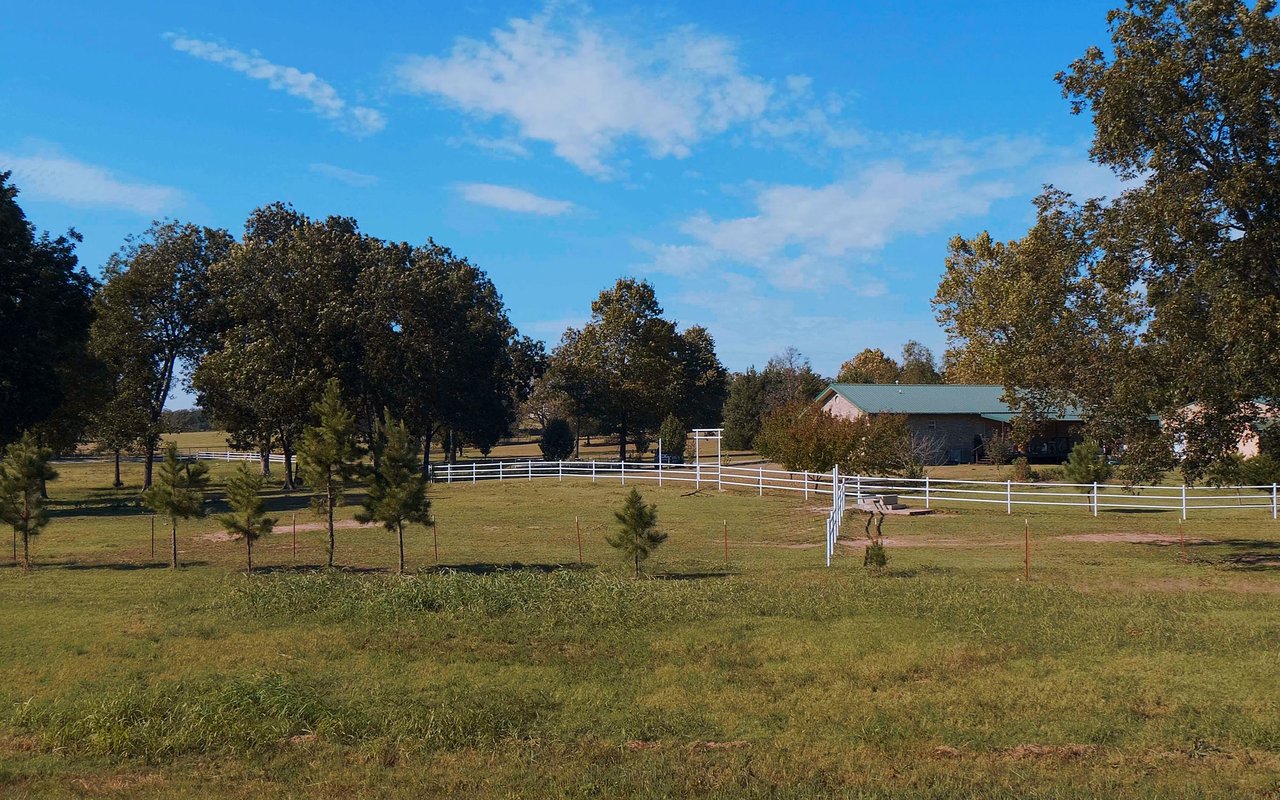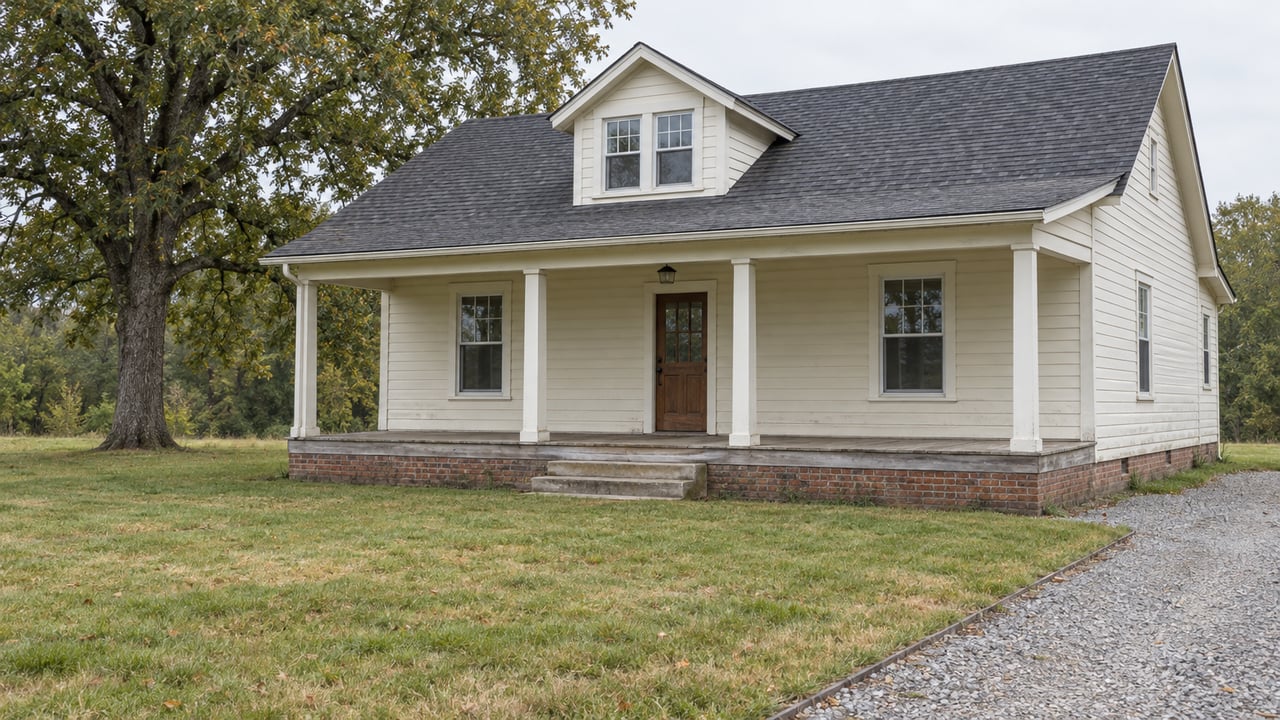
An acre of pasture in Muskogee County rented for $21.50 a year in 2026, according to USDA county cash rent estimates. That was a dollar less than in 2025. Over the same stretch, Oklahoma pasture values climbed 4.8% to $2,200 an acre in USDA's July 2026 estimate. Cattle prices hit new records in the second quarter of 2026, according to the Federal Reserve Bank of Kansas City.
If grass were priced on what it earns, those three numbers wouldn't fit together. Around Porum, a pasture's price follows what the next buyer plans to do with the ground and where they expect values to head. What a grazing tenant will pay for it plays a much smaller part. If you're shopping acreage in Muskogee, McIntosh, Haskell or Pittsburg County, that affects how you size up a listing, how you compare it against published averages, and who you'll be bidding against.
The Rent Side of the Ledger
Here are USDA's county pasture rent estimates for the four counties around Porum and Lake Eufaula, in dollars per acre per year:
| County | 2025 pasture rent | 2026 pasture rent | Change |
|---|---|---|---|
| Muskogee | $22.50 | $21.50 | down $1.00 |
| McIntosh | $17.50 | $16.50 | down $1.00 |
| Haskell | $17.00 | $16.50 | down $0.50 |
| Pittsburg | $14.50 | $17.00 | up $2.50 |
Pittsburg County is the exception, with a jump of about 17%. Even after that jump, its $17 rent sits below the $18 statewide pasture average, which didn't move between 2025 and 2026. Muskogee County is the only one of the four that rents above the state average, at $3.50 over.
Now set the statewide figures side by side. A $2,200 acre of Oklahoma pasture that rents for $18 a year brings in a gross return of roughly 0.8%, using USDA's 2026 numbers for both. That's before property taxes, fence repairs, ponds or anything else an owner pays for. Nobody bidding $2,200 an acre is doing it for the grazing check, and in three of these four counties the grazing check got a little smaller this year.
The Region Went One Way and These Counties Went the Other
A dip in local rent could just be a soft year for the whole cattle economy, but the regional data says otherwise. The Kansas City Fed covers Oklahoma and six other states and areas. In its second-quarter 2026 survey, ranchland cash rents across that district rose about 6% from a year earlier, and ranchland values rose more than 7%. In the first quarter, the Fed reported ranchland values up nearly 11% and at new record highs "alongside ongoing strength in the cattle sector."
So across the wider region, ranch rents and ranch values moved up together, as you'd expect when cattle pay well. Around Porum, values followed the region while rents mostly didn't. The demand that's lifting prices here has a weaker link to grazing income than it does across the district.
The cattle themselves are bringing in money. At McAlester Union Stockyards' September 29, 2026 sale, USDA market reporters logged 1,400 head and called feeder steers $3 to $9 higher than the week before, with moderate to good demand. Steers weighing 500 to 549 pounds brought $360 to $420 per hundredweight, averaging $383.60. Strong calf prices and slipping pasture rents in the same corner of the state point to a different kind of buyer bidding up the land.
Who's Bidding Instead
The Fed's fourth-quarter 2025 survey found that farmers were still the main buyers across the district, but the share of farmland they bought slipped to slightly under 75%, on average. That was the lowest since 2011. So lenders put more than a quarter of the land sold in the hands of someone other than a farmer. The survey doesn't split that group into hunters, weekend owners, investors or anyone else, and no published source breaks it out for eastern Oklahoma.
The Fed's second-quarter report also explains why land appeals to buyers who don't need the rent. The rent-to-value ratio on nonirrigated cropland fell slightly below the 10-year average yield on long-term U.S. bonds. Meanwhile, the 10-year average rate of land appreciation ran more than 100 basis points above it. That figure covers cropland, not pasture. The reasoning carries over to grass. When appreciation does most of the work, rent becomes a side benefit.
The other half of the story is timing. A January 2025 American Farm Bureau Federation analysis, republished by Oklahoma Farm Report, describes cash rents as adjusting to land values with a lag. Leases get renegotiated on their own schedule and on what the grass can carry, while sale prices respond to whoever shows up with money.
To see what lifestyle buyers pay for, the closest published work comes from just south of us. A January 2026 Southern Ag Today study of a Washington County, Texas case found that each additional five minutes of drive time to Brenham was associated with a 12% lower land value. Each half-point increase in surface-water coverage added 5%. That's Texas, not Oklahoma. Still, the variables it identifies are access and water, the same things that set a pasture near Porum apart from one an hour down a county road. Neither one shows up in a rent figure.
The County Average Describes Somebody Else's Tract
Most buyers go looking for a benchmark. The best-known one for Oklahoma ag land comes from Oklahoma State University Extension, and its method is built for a different buyer than many people shopping around Porum.
OSU's land value database includes only agricultural tracts of 40 acres or more. Since 2021 it has also excluded sales above $9,000 an acre. Its latest county averages are built from 2021 through 2023 sales. Average parcel sizes run 120 acres in Muskogee County, 164 in McIntosh, 181 in Pittsburg and 233 in Haskell. Those figures describe working ag sales from a few years back. A 20-acre homestead tract or a lake-adjacent parcel above the $9,000 cap never made it into the data.
Tract size matters on its own, too. OSU says per-acre prices generally fall as tracts get bigger, with "a wide premium" between the smallest and largest parcels. Weighting OSU's statewide pasture figures for 2021 through 2023 by sale count puts 40-to-100-acre tracts near $3,484 an acre and 100-to-200-acre tracts near $2,418. That's about a 44% premium for the smaller class. The curve isn't perfectly smooth across the larger sizes, and the data stops at 40 acres. No published source puts a figure on what happens below that.
All of this lines up with what the rent data shows. The smaller the tract and the closer it sits to water and pavement, the more its price depends on things a grazing lease doesn't pay for.
What This Changes When You Write an Offer
You won't find any of this on a listing sheet, and it affects how a tract near Porum should be judged:
- Price-per-acre comparisons need matching tract types. Holding a 30-acre parcel against a county average built from 120-to-233-acre ag sales will make nearly any small tract look expensive. Those averages also run a few years old.
- Rent is a floor for a cattle operation, not a ceiling for the price. If your plan really is grazing, run the math at about $16.50 to $21.50 an acre a year in these counties for 2026, and expect to compete with buyers who aren't running that math at all.
- Access and water drive value more than the grass does. Road frontage, drive time to town and surface water are what separate one pasture from the next, and none of them shows up in a rent figure.
- An existing lease is a separate conversation. Under the lag the Farm Bureau analysis describes, a lease in place may reflect older terms, so ask for the actual agreement rather than assuming it matches county estimates.
A Few Common Questions
Is pasture around Porum overpriced compared with what it earns? By rent alone, the gross return at statewide 2026 figures is under 1%. Buyers are paying for appreciation, use and location. Whether that price makes sense depends on which of those you value. This post isn't investment advice.
Why did Pittsburg County rents rise when the others fell? USDA's estimates show the increase but don't explain it. Pittsburg started from the lowest rent of the four at $14.50 in 2025 and still sits below the state average at $17.
Where can I find per-acre prices for tracts under 40 acres? None of the public sources here publish them. OSU's data starts at 40 acres. For small acreage, recent comparable sales of similar tracts are the only real yardstick, and they take local digging.
If you're looking at a pasture or homestead tract around Porum and want help sizing it up against similar sales rather than a county average, Jeremy Grumbles brings hands-on horse and cattle experience to that conversation. Schedule your free consultation, and bring the listing and any lease paperwork with you.